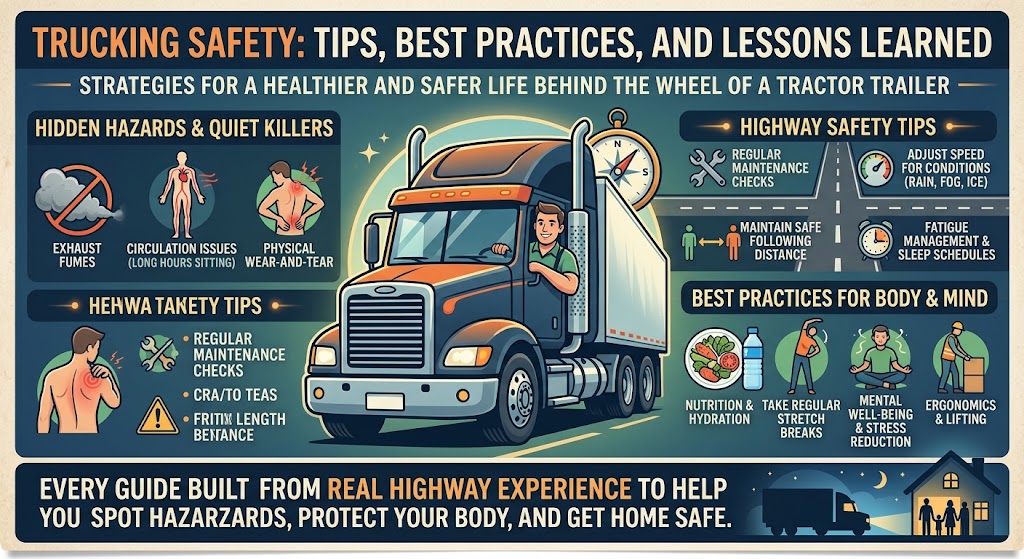
Steering a tractor-trailer is one of the country's toughest jobs. Long hours and brutal driving conditions claim the lives of over 800 drivers every year. High-speed wrecks and fires grab the headlines, but quiet killers take an equal toll. Exhaust fumes, poor circulation, and physical wear-and-tear silently destroy a trucker's health. I build every safety guide on this site from real highway experience. Use these tips to spot hidden hazards, protect your body, and return home safely.
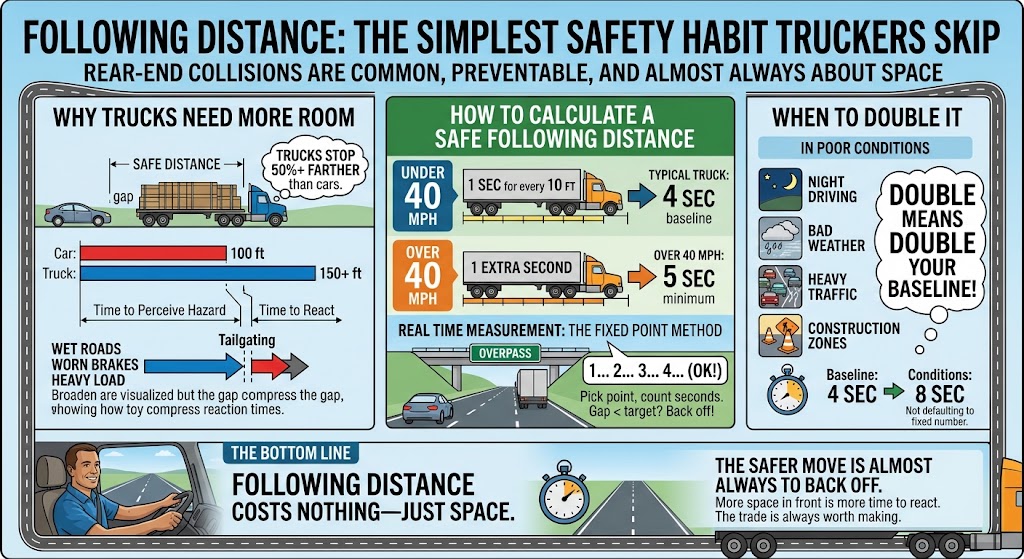
Rear-end collisions are common, preventable, and almost always about space
Tailgating is one of the most common driving habits and one of the easiest to fix. Rear-end crashes make up a large share of vehicle collisions on U.S. roads, and for commercial drivers, the physics involved make the margin for error even smaller. A truck simply cannot stop as quickly as a passenger vehicle, which means the following distance that feels adequate in a car is often dangerously short behind the wheel of a loaded tractor-trailer.
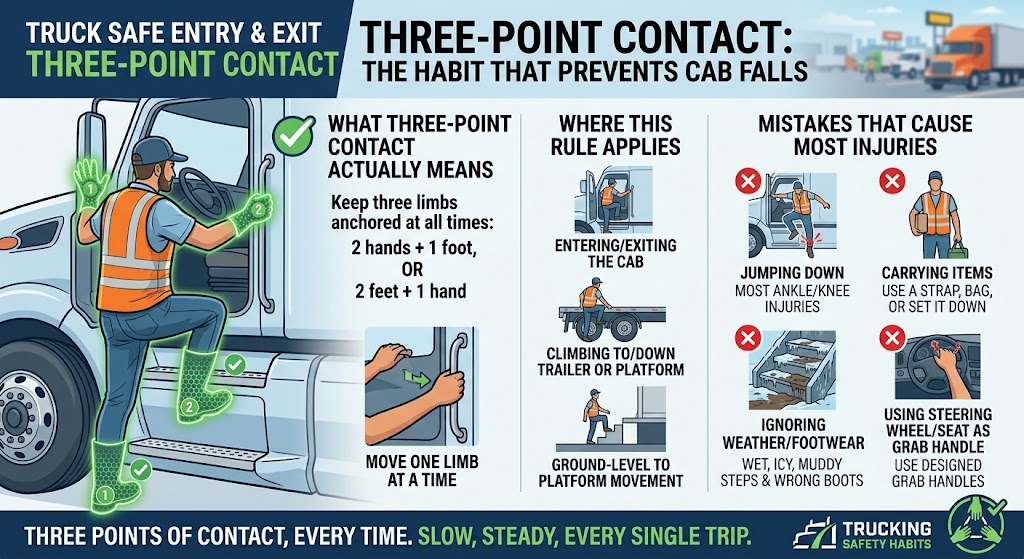
One of the simplest safety rules in trucking is also one of the most skipped
Slip-and-fall injuries from entering and exiting a cab are among the most common, and most preventable, injuries in trucking. They rarely happen because of a dramatic hazard. They happen because a driver rushed a routine step they've done a thousand times before. Three-point contact is the fix, and it works because it's simple enough to become automatic.
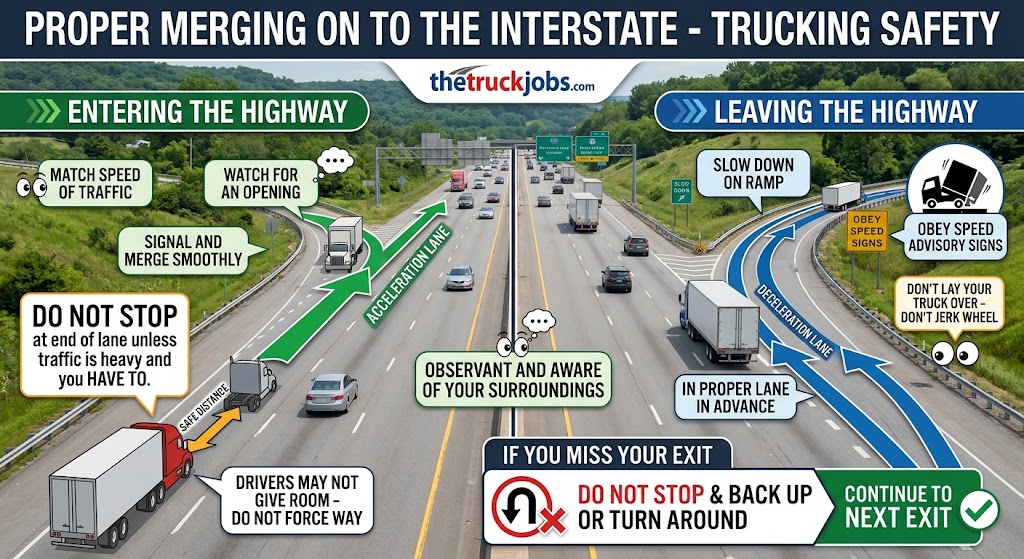
Timing, speed matching, and patience: in that order
Merging looks simple from the outside: match speed, find a gap, move over. In an 80,000-pound tractor-trailer, every part of that sequence takes longer and leaves less room for error than it does in a passenger car. Getting on and off the interstate safely comes down to using the ramp correctly and never rushing the merge.
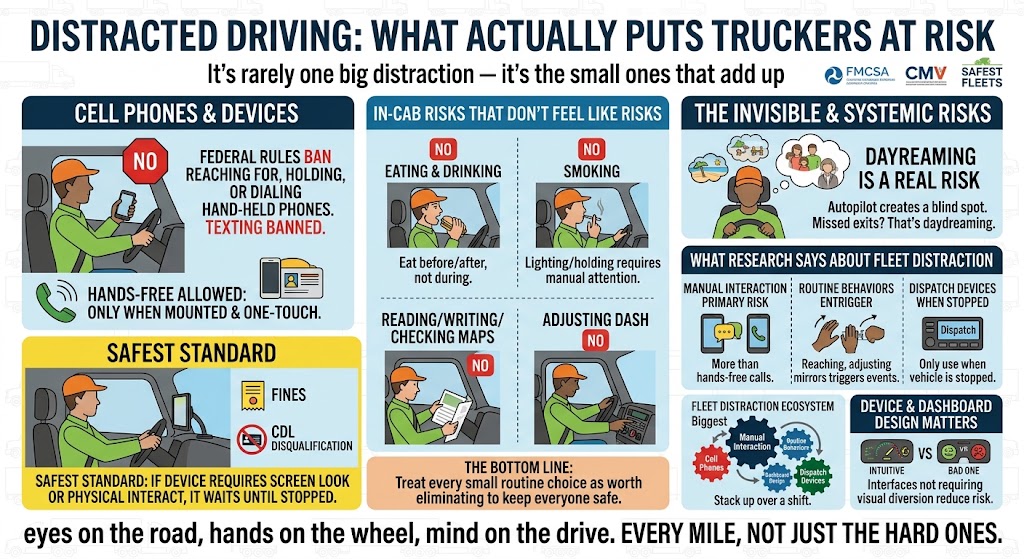
It's rarely one big distraction, and it's the small ones that add up
Distraction is any moment attention shifts away from the driving task, whether that's something outside the cab, like a billboard or passing vehicle, or something inside it, like a phone, a meal, or a wandering mind. For commercial drivers, the consequences of even a few seconds of distraction are magnified by vehicle size, stopping distance, and time on the road. Distracted driving remains a significant contributor to serious and fatal crashes nationwide.
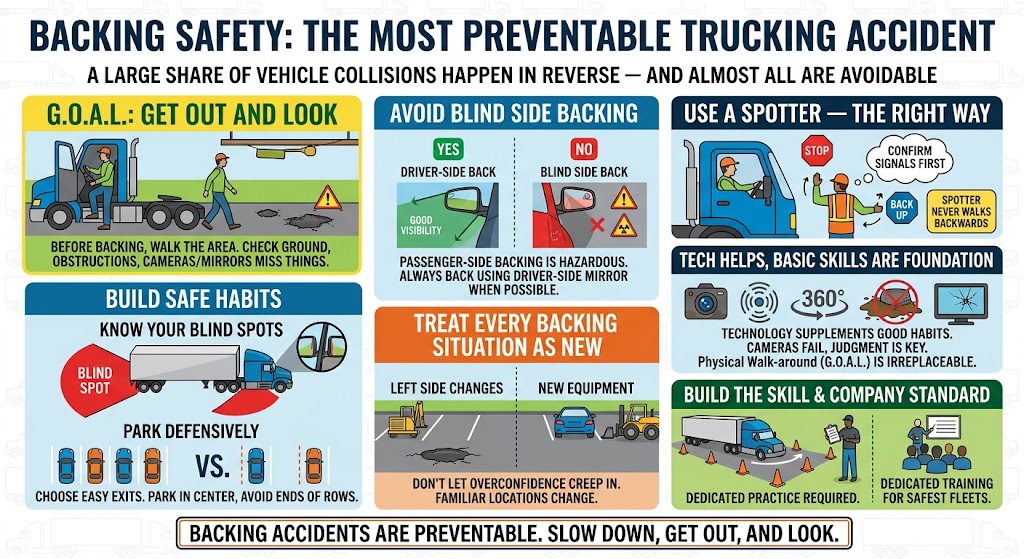
A large share of vehicle collisions happen in reverse and almost all of them are avoidable
Backing up accounts for a disproportionate share of vehicle collisions relative to the small fraction of driving time spent in reverse. For truck drivers, the stakes are higher: limited visibility, longer trailers, and tight lot spacing turn routine backing maneuvers into one of the most common sources of preventable damage and injury in the industry. The good news is that backing accidents are also among the most preventable if drivers build the right habits.
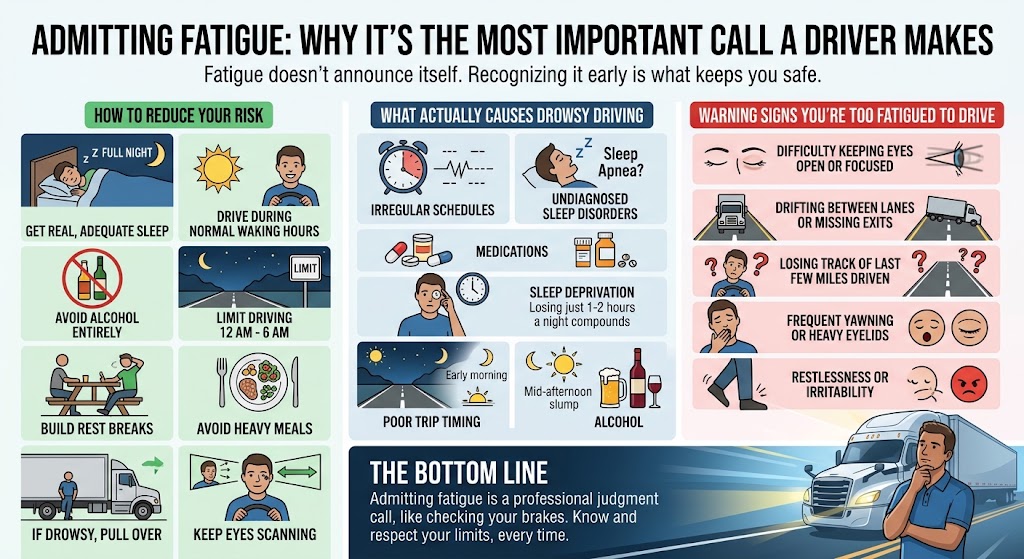
Fatigue doesn't announce itself. Recognizing it early is what keeps you safe.
Fatigue is one of the most persistent hazards in trucking, and one of the hardest to admit to yourself in the moment. Unlike a mechanical issue or a weather delay, fatigue is easy to push through, right up until it isn't. Recognizing and admitting when you're too tired to drive safely is one of the most important safety decisions a driver makes, and it's a decision that has to be made before fatigue takes that choice away from you.
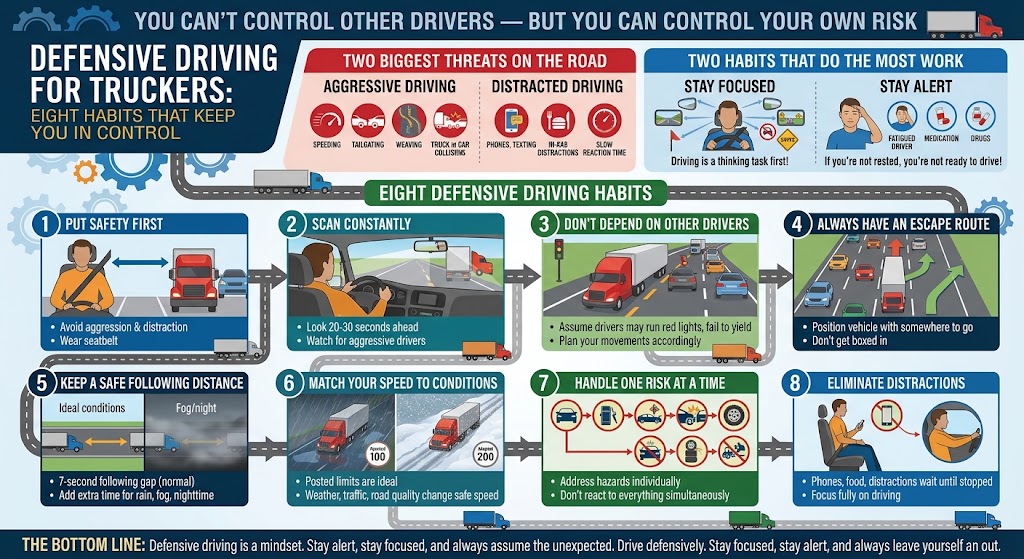
You can't control other drivers, but you can control your own risk
Driving a commercial vehicle is inherently risky. Aggressive drivers, distracted drivers, and simple bad luck are all things you'll encounter on any given run. Defensive driving isn't about assuming the worst in people — it's about staying prepared enough that other people's mistakes don't become your emergency.
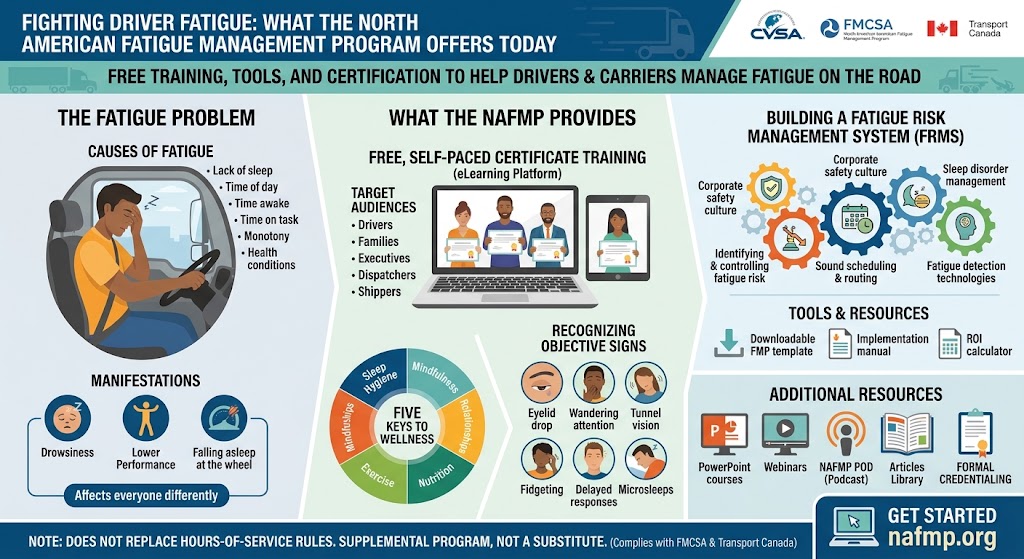
Free training, tools, and certification to help drivers and carriers manage fatigue on the road
Fatigue remains one of the most persistent safety hazards in trucking. It's a workplace hazard that affects everyone differently, shaped by lack of sleep, time of day, time spent awake, time on task, monotony, and underlying health conditions — and it shows up as drowsiness, lower driving performance, and, in the worst cases, drivers falling asleep at the wheel.
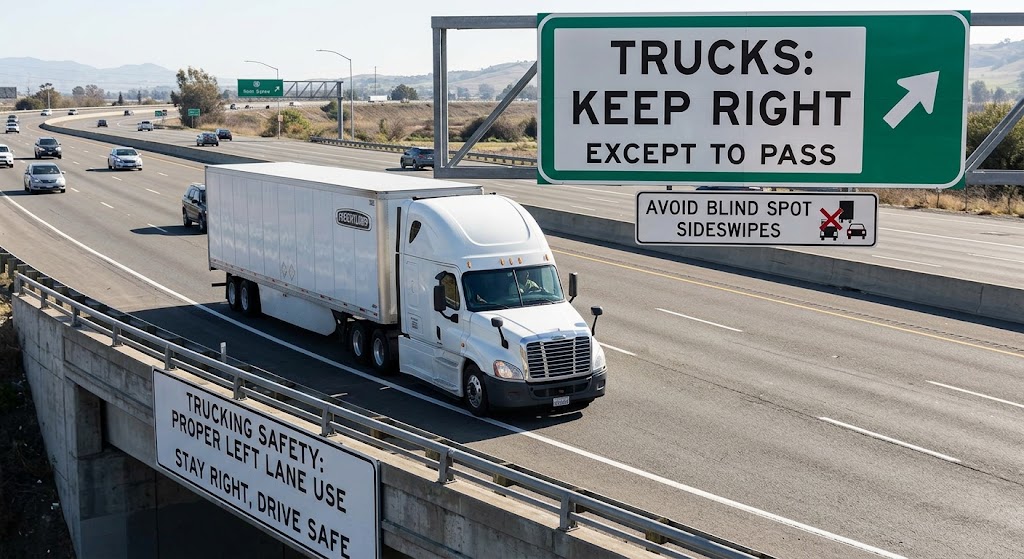
This section explains proper left-lane usage for truck drivers — when and how to use it in those areas of the country where tractor-trailer drivers are permitted to drive in the left lane. When your truck is in the left-hand lane, other vehicles are on your blind side. Using the left lane can be dangerous, and it's one of the main contributing factors in blind-side sideswipes and the highway deaths that result from them.